
Sep 10
Bladder Leakage May Improve With App or Video Treatment
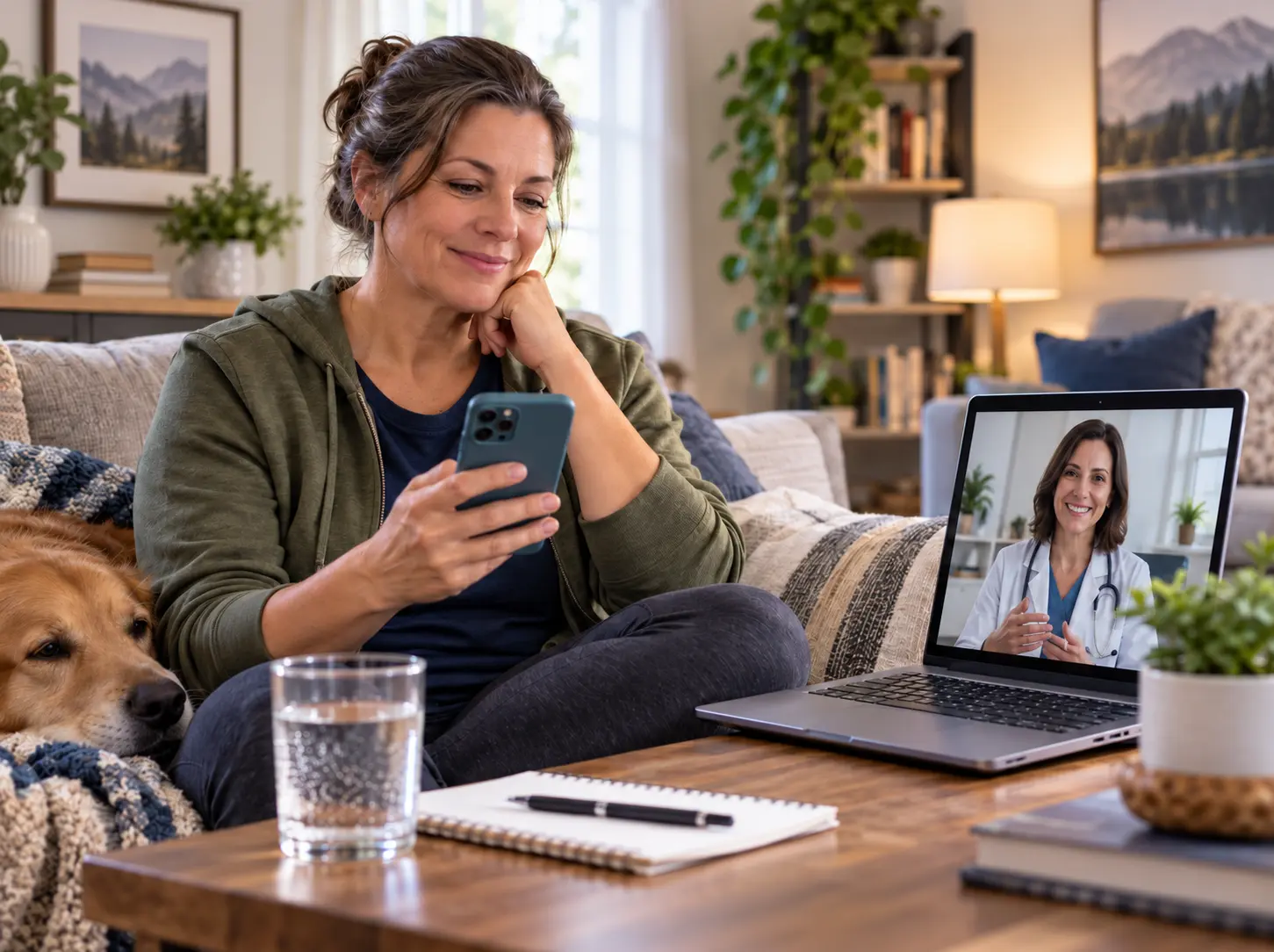
Urinary incontinence means leaking urine when you do not mean to. Treatments such as pelvic floor exercises, bladder training, and changes in fluid habits can help, but getting care in person may be hard for some people.
A recent study looked at whether women veterans could get this type of treatment from home using either a mobile app or a video visit with a health care professional.
What did the study look at?
The study included 286 women veterans with urinary incontinence.
Women were placed into one of two groups:
- An 8-week mobile app program called MyHealtheBladder
- A video visit with a trained health care professional
The treatments included pelvic floor muscle exercises, bladder control strategies, fluid management, and other ways to help manage bladder leakage.
Researchers wanted to know which option helped symptoms more and whether an extra video visit would help women whose symptoms did not improve at first.
What did the study find?
Both treatments helped improve bladder leakage symptoms.
Women who used the app tended to notice improvement sooner than women who had a video visit. The app group reached a meaningful level of improvement after about 4 weeks, while the video visit group reached that level later.
However, the difference between the two groups was not large enough to be considered an important clinical difference overall. In other words, both options appeared to be useful.
Did an extra video visit help?
Some women did not have enough improvement after the first 8 weeks.
Researchers gave some of these women an extra video visit, called a booster visit. The extra visit did not lead to clear additional improvement in bladder symptoms.
The researchers suggested that people who do not improve with remote treatment may need more evaluation, including possibly an in-person visit.
Were women satisfied with remote treatment?
Yes. About 90% of women reported being satisfied with the app or video visit at 12 weeks.
Most women also reported continuing their pelvic floor muscle exercises. No clinically meaningful harmful events were reported during the study.
Why might remote treatment be helpful?
Behavioral treatment for urinary leakage may require several visits. Traveling to appointments can be difficult, especially for people who live far from a clinic.
Apps and video visits may make it easier for some people to get treatment without traveling.
What should I ask my health care provider or urologyhealth.com?
If bladder leakage is bothering you, you may want to ask:
- Could pelvic floor exercises help me?
- Would bladder training or changes in fluid habits help?
- Is a video visit or online program available to me?
- How long should I try treatment before deciding if it is working?
- What should I do if my symptoms do not improve?
Your health care provider can help decide which treatment is best for your symptoms and health needs.
The Bottom Line
Bladder leakage may be treated successfully without always needing an in-person visit.
In this study, both a mobile app and a video visit helped women veterans improve urinary incontinence symptoms. The app helped symptoms improve sooner, but overall, neither option was clearly better than the other in a way that would make a major difference for patients.
An extra video visit did not clearly help women who had not improved after the first treatment.
About the Study
This was a randomized clinical trial involving women veterans at three VA health care systems in the southeastern United States. Participants were adults with urinary incontinence who had access to email and a computer, tablet, or mobile phone.
The study had some limits. Many participants did not complete all follow-up visits, and the group of women who received an extra booster visit was fairly small. Because the study focused on women veterans using VA care, the results may not apply in exactly the same way to everyone with urinary incontinence.
Source
Markland AD, Goldstein KM, Beasley TM, et al. Remote Access to Urinary Incontinence Treatments for Women Veterans: The PRACTICAL Randomized Clinical Trial. JAMA Network Open. 2025;8(9):e2532111.