
Jun 30
Breaking the Silence: Overcoming the Stigma Around Bladder Issues in Women

If you’ve ever crossed your legs when you laugh, hurried to find a restroom when a sudden urge hit, planned road trips around restroom stops, or quietly packed an extra pad “just in case,” you’re not alone.
Yet for many women, bladder leakage, urinary urgency, and other bladder control symptoms remain topics they’d rather avoid altogether. Some feel embarrassed. Others assume these changes are simply part of aging, childbirth, or menopause.
The reality is that bladder issues are incredibly common among women, and no one should feel uncomfortable talking about them. Whether it’s leaking urine when you laugh or cough, feeling a sudden urge to find a restroom, or planning daily activities around bathroom access, these symptoms can affect quality of life in meaningful ways.
Recent research continues to highlight just how many women are navigating these challenges and why open conversations about bladder health matter more than ever.
Why So Many Women Stay Silent About Bladder Problems
The hardest part of bladder problems isn’t necessarily the symptoms themselves. It’s feeling like you have to manage them alone.
Researchers with the Prevention of Lower Urinary Tract Symptoms (PLUS) Research Consortium spent a decade studying bladder health in women and found widespread gaps in knowledge about normal bladder function, bladder health, and urinary symptoms.

That lack of awareness, combined with embarrassment, stigma, and the belief that symptoms, a normal part of aging and childbirth, can make it easy to dismiss changes or put off conversations that could lead to answers.
As a result, many women spend years adapting to symptoms rather than seeking information, support, or treatment.
How Women Quietly Adapt to Bladder Control Issues
Women are remarkably good at adjusting. They adjust routines. They adjust schedules. They adjust expectations.
Over time, it becomes easy to work around bladder control issues instead of questioning them. Bladder leakage, urinary urgency, or frequent trips to the bathroom can slowly become part of daily life rather than something worth discussing.
Researchers with the PLUS Consortium found that even women who considered themselves otherwise healthy still relied on adaptive bladder control behaviors, suggesting that bladder health changes don’t always appear suddenly or dramatically.
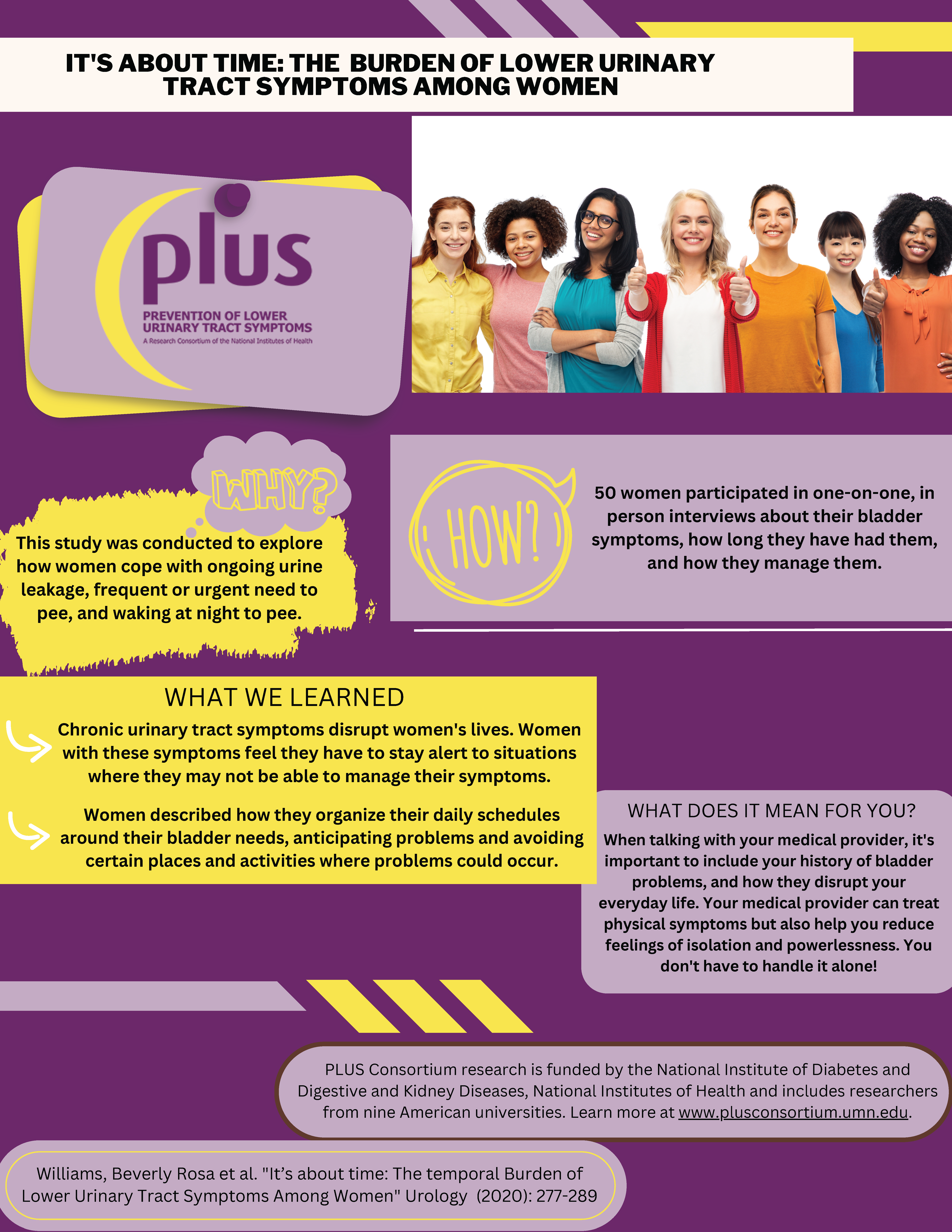
These adaptive behaviors can include:
- Memorizing where every restroom is located.
- Avoiding long car rides or flights.
- Limiting fluids before leaving the house.
- Skipping exercise classes or social activities.
- Wearing pads “just in case.”
- Worrying about being too far from a bathroom.
Sound familiar? Over time, these workarounds may feel harmless, or even sensible, but they can make it easier to accept symptoms rather than ask why they’re happening in the first place. What begins as a simple adjustment can gradually become a new normal, preventing women from recognizing that their symptoms deserve attention.
Common Doesn’t Mean Normal
Perhaps one of the biggest misconceptions surrounding bladder control is the belief that symptoms are simply something women should expect.
You may have heard:
- “That’s just part of getting older.”
- “Everyone leaks a little after having kids.”
- “It’s not serious enough to bring up.”
- “You just learn to live with it.”
But “common” and “normal” are not the same thing.
While bladder symptoms may become more common with age, childbirth, and menopause, that doesn’t mean they should automatically be accepted as unavoidable.
Researchers from the PLUS Consortium found that bladder health exists on a spectrum, suggesting that women may begin experiencing subtle changes and adaptive behaviors long before symptoms become severe.
Recognizing those changes early creates opportunities to understand better what’s happening and address concerns before they become more disruptive.
Changing the Conversation Around Bladder Control
No one hesitates to talk about high blood pressure, allergies, or knee pain. And bladder control should be no different.
Yet urinary symptoms can feel deeply personal, causing women to worry about embarrassment, judgment, or whether their symptoms are “serious enough” to discuss.
Simply put, many women have never been taught what healthy bladder function looks like or when changes deserve attention. That knowledge gap can leave women believing they are alone, even as millions of others are experiencing similar concerns.
“We want women to know they don’t have to simply accept these changes as part of life,” says Diane K. Newman, DNP, ANP-BC, FAAN, FAUNA, and Chief Clinical Officer at Urology Health and a member of the PLUS Research Consortium. “The sooner we understand what’s causing symptoms, the sooner we can help patients find the right path forward.”
Open conversations help reduce stigma, increase awareness, and empower women to seek answers sooner. The more we talk about bladder health, the easier it becomes for women to recognize symptoms, ask questions, and understand that support is available.
You Don’t Have to Reach a Breaking Point
Too often, women spend years adjusting to bladder control issues, and they never ask questions.
At Urology Health, we understand that bringing up bladder control symptoms isn’t always easy. That’s why our approach begins with listening, education, and helping patients understand the full range of available treatment options. Through our comprehensive bladder health program, we help women move beyond simply managing symptoms and toward understanding what’s causing them and finding solutions that fit their lives.
For some, that may mean lifestyle changes or pelvic floor exercises. For others, it may involve medication, advanced therapies, or ongoing support. Whatever the path, the first step is simply starting the conversation.
You don’t have to wait until symptoms interfere with travel, exercise, sleep, or daily life before bringing them up. And you certainly don’t have to suffer in silence.
Most importantly, you don’t have to navigate these concerns alone.
With the right support, better bladder health may be closer than you think. Contact Urology Health today to schedule an evaluation and learn more about your options!